
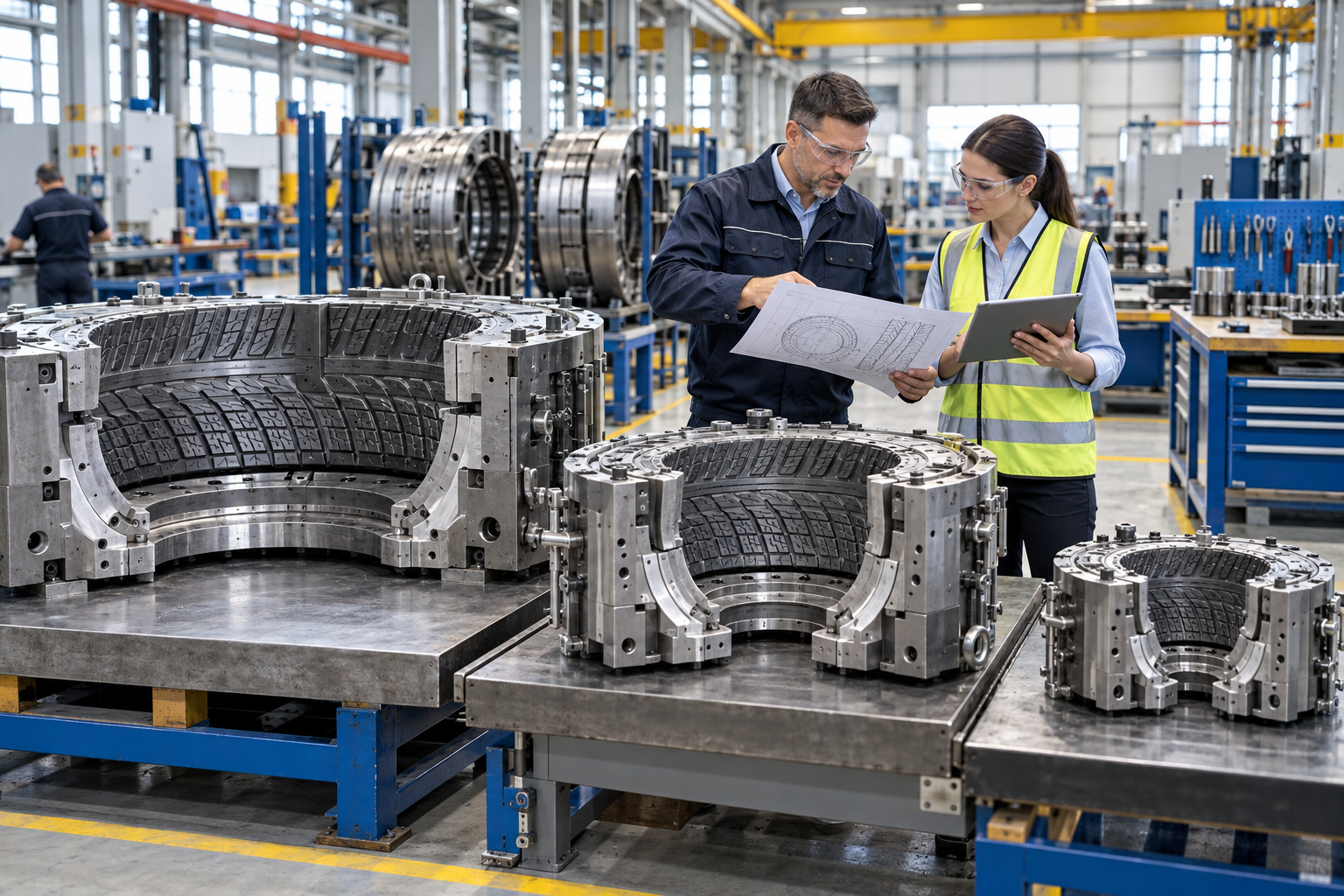
The price of tire molds cannot be calculated accurately from tire size alone. Mold structure, tread complexity, materials, machining requirements and inspection scope can all change the final quotation.
Understanding these cost factors helps purchasing teams compare quotations more effectively and avoid selecting tooling based only on the lowest initial price.
Table of Contents
1. Tire Size and Mold Dimensions
Larger tire molds usually require more material, longer machining time and heavier handling equipment.
However, diameter alone does not determine the price. Mold width, cavity depth, component count and total weight must also be considered.
Customers should provide accurate tire dimensions and curing equipment information when requesting a quotation.
2. Mold Type and Structure
Two-piece molds and segmented tire molds have different component structures and manufacturing requirements.
Segmented tire molds contain multiple matched tread segments, sidewall plates, bead rings and interfaces with the mold container. Each component must be machined, inspected and assembled accurately.
The quotation should clearly state which components are included and whether the container, inserts, vents and spare parts are supplied.
Learn more about the production stages in our Tire Mold Manufacturing Process guide.
3. Tread Pattern Complexity
Complex tread patterns generally require more programming, machining and finishing time.
Cost may increase due to:
- Deep grooves
- Numerous fine sipes
- Small tread blocks
- Complex shoulder features
- Multiple pitch lengths
- Special textures
- Difficult machining access
- Replaceable tread inserts
A manufacturability review can identify features that require special cutting tools, electrical discharge machining or laser processing.
Complex tread features should be evaluated during the tire mold design stage before a final quotation is prepared.
4. Sidewall Markings and Inserts
Sidewall complexity also affects the price of tire molds.
Detailed logos, certification markings, decorative patterns and replaceable lettering inserts require additional engineering and machining.
If several brand or market versions are required, tell the supplier during the quotation stage. Planning replaceable inserts early may reduce the cost of future changes.
5. Material Selection
Aluminum alloys and steels have different costs, machining characteristics and service properties.
Material selection should consider:
- Curing temperature
- Expected production volume
- Heat-transfer requirements
- Component function
- Mold weight
- Wear resistance
- Repairability
- Customer specifications
A complete quotation should identify the proposed material grades rather than simply stating “aluminum” or “steel.”
6. Manufacturing and Surface Finishing
The required manufacturing processes influence both cost and delivery time.
These may include:
- CNC turning
- Three-axis or five-axis machining
- Electrical discharge machining
- Laser engraving
- Drilling and vent installation
- Manual fitting
- Polishing or texturing
- Final assembly
High-accuracy tire molds may require several machining setups and intermediate inspections.
Surface finishing requirements should be clearly defined because different areas of the mold may require different finishes.
7. Inspection and Documentation
Inspection is part of the product, not an optional activity.
The quotation should define whether it includes:
- Material certificates
- Dimensional reports
- CMM inspection
- Profile scanning
- Runout measurements
- Assembly inspection
- Functional movement checks
- Final photographs
- Packing records
Additional customer-specific reports or third-party inspection may affect the total price.
8. Quantity and Delivery Schedule
Ordering several similar tire molds may improve material purchasing, programming and production efficiency.
However, every mold still requires component manufacturing, assembly and inspection. The supplier should explain which costs can be shared and which remain fixed.
Urgent delivery may require additional shifts, expedited materials or changes to the production schedule. These requirements should be discussed before the purchase order is issued.
Price is only one part of supplier evaluation. Read our Tire Mold Manufacturers Selection Guide before choosing a long-term tooling partner.
How to Compare Tire Mold Quotations
Do not compare only the total price. Use the following checklist:
- Confirm the same technical scope.
- Compare included mold components.
- Review proposed materials.
- Check venting and insert quantities.
- Compare inspection documents.
- Confirm packing and shipping responsibilities.
- Review spare-parts pricing.
- Evaluate after-sales support.
- Confirm delivery milestones.
- Identify excluded items.
A low quotation may become expensive if important components or services are excluded.
Information Required for an Accurate Quotation
Provide:
- Tire size and profile
- 2D drawings and 3D data
- Tread pattern and pitch sequence
- Sidewall artwork
- Curing press information
- Mold structure
- Preferred materials
- Venting requirements
- Inspection standards
- Quantity and delivery date
Complete information allows suppliers to quote tire molds more accurately.
Watch our tire molds machining, assembly and quality inspection videos on our YouTube channel.
Frequently Asked Questions
How quickly can a tire mold quotation be prepared?
A preliminary quotation may be prepared from basic information, but a reliable final quotation requires complete technical data and scope confirmation.
Why do prices vary between suppliers?
Differences may come from materials, equipment, engineering support, outsourced processes, inspection scope and included components.
Are spare parts included in the mold price?
Not always. Ask whether vents, inserts, fasteners, replacement segments or other spare parts are included.
Should buyers choose the lowest quotation?
Price is important, but buyers should also compare quality control, delivery reliability, engineering support and after-sales service.
Request a Tire Mold Quotation
Send your tire drawings, tread data, sidewall artwork, press information and required delivery schedule. We can review the project and provide a clearly defined quotation for your tire molds.