
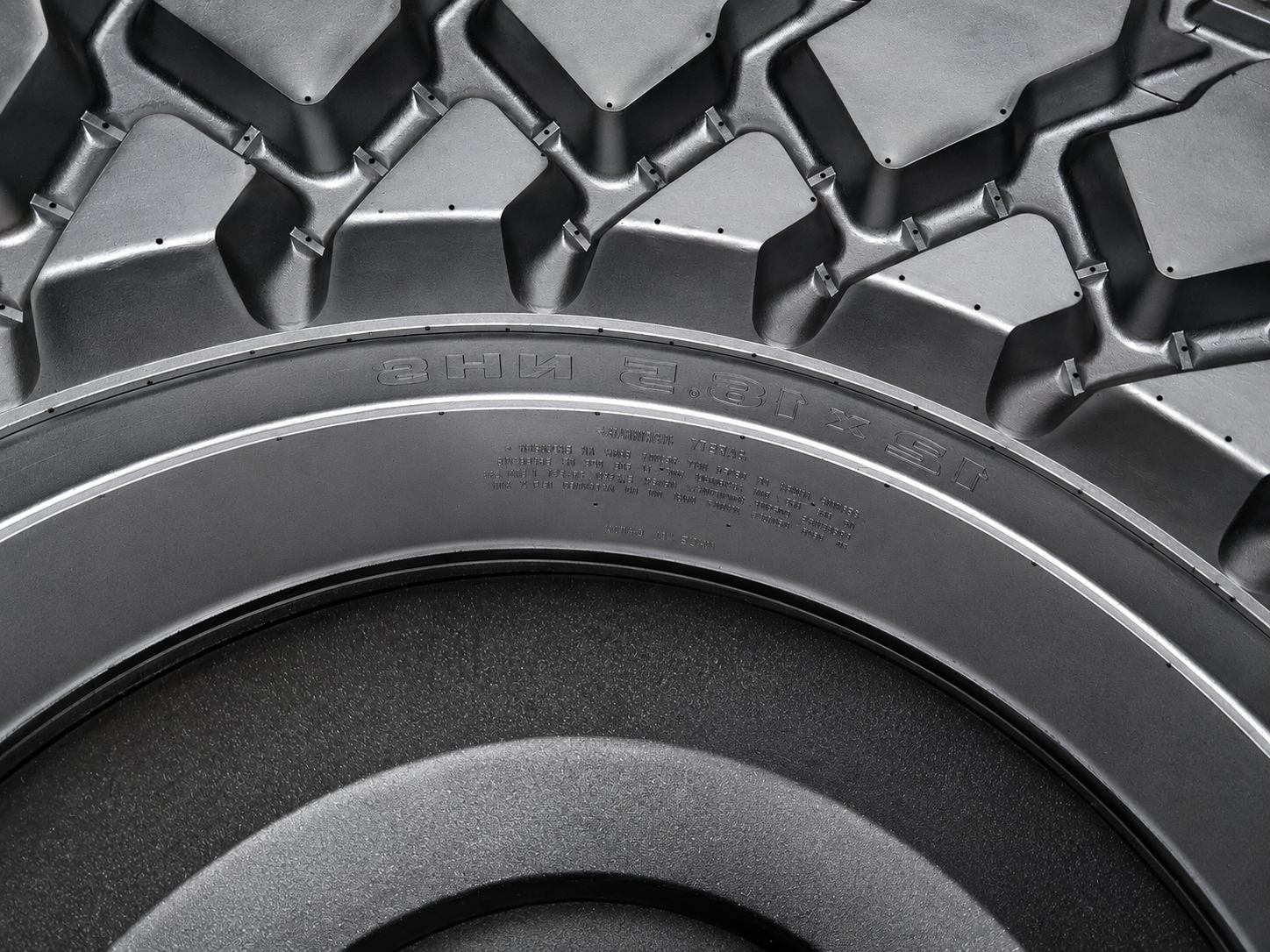
For tire manufacturers, a segmented tire mold is not only a tool for forming the tire tread. It also affects how easily a tire can be released from the mold, how accurately complex tread details are reproduced, and how consistently the mold performs during repeated production.
This becomes especially important when producing tires with deep grooves, complex tread blocks, sipes, aggressive shoulder patterns, or detailed sidewall markings. If the segmented tire mold is not properly engineered or manufactured, problems such as tread damage, uneven segment matching, flash, trapped air, and additional production adjustments may occur.
A well-designed segmented tire mold uses radial segment movement to release the cured tire while maintaining accurate cavity geometry. However, achieving stable production requires more than simply choosing a segmented structure.
For tire manufacturers, three practical areas deserve particular attention: tread release, segment matching, and long-term maintenance.
1. Use Segmented Tire Mold Design to Improve Complex Tread Release
One of the main reasons tire manufacturers choose a segmented tire mold is to handle tread patterns that may be difficult to release from a conventional mold.
Modern tire designs can include deep grooves, narrow sipes, large tread blocks, directional patterns, and complex shoulder features. When the cured rubber is released, these features can create additional interference between the tire and mold cavity.
A segmented tire mold opens through radial movement of multiple tread segments. Instead of pulling the entire mold structure away in one direction, the segments move outward from the cured tread.
This structure can help reduce interference around complex tread geometry and make demolding more suitable for tires with detailed tread patterns.
For example, agricultural tires may have deep traction lugs, while ATV and off-road tires can use aggressive tread blocks. Passenger car and motorcycle tires may also require more detailed grooves, sipes, and shoulder patterns.
Pinjin provides tire mold solutions for passenger car, truck and bus, motorcycle, bicycle, agricultural, OTR, ATV and solid tire applications. Its engineering capabilities include custom tread, sidewall, venting and mold structure design based on customer drawings and specifications. pj.tydzg.cn
However, the segmented structure itself does not automatically guarantee good demolding.
The segment geometry, tread design, split locations, cavity dimensions and movement of the mold components all need to work together.
This is why manufacturers should review the tread design from a mold engineering perspective before machining begins.
2. Control Segment Matching to Reduce Tread and Flash Problems
Another common concern in segmented tire mold production is the matching between individual segments.
A tire mold contains multiple precision components that must come together to form one continuous cavity. If segment alignment or dimensional accuracy is not properly controlled, the resulting tire may show unwanted marks, flash or inconsistent tread transitions.
This is particularly important for high-volume tire production.
Even a small dimensional difference between components can become more noticeable when the mold repeatedly opens and closes during curing cycles.
For this reason, precision CNC machining and inspection are important parts of segmented tire mold manufacturing.
Pinjin states that its key CNC machining accuracy can reach ±0.005 mm depending on mold structure. Its tire mold manufacturing capabilities include CNC machining, EDM engraving, heat treatment, mold assembly and quality inspection. pj.tydzg.cn
Quality control should not be limited to the machining stage.
After individual components are manufactured, fitting and assembly also need to be checked. The relationship between tread segments, sidewall plates, mold rings, inserts and venting components can influence the final mold performance.
Pinjin’s tire mold component manufacturing includes tread segments, sidewall plates, mold rings, inserts and venting components, with inspection and fitting considered as part of the manufacturing process. pj.tydzg.cn
For buyers, this means that evaluating a segmented tire mold manufacturer should involve more than asking about CNC machine accuracy.
It is also important to understand how the manufacturer controls:
- Segment dimensions
- Segment matching
- Cavity profile
- Sidewall alignment
- Split-line condition
- Venting
- Surface finish
- Final assembly
These details can directly influence the appearance and consistency of the finished tire.
3. Design the Segmented Tire Mold for Long-Term Maintenance
Production performance is not only about how the mold works when it is new.
For tire manufacturers running repeated production cycles, maintenance and repair can become equally important.
A segmented tire mold contains multiple components that may require cleaning, inspection, adjustment, repair or replacement over time. If a critical component is damaged or worn, the manufacturer needs an efficient way to restore the mold without unnecessarily replacing the entire tooling system.
This is where serviceable mold construction becomes valuable.
Depending on the mold structure, individual components such as tread segments, sidewall plates, inserts, mold rings and venting components may be inspected or replaced separately.
Pinjin supports tire mold maintenance, repair and precision replacement components. Its components can be manufactured according to customer drawings, existing mold structures or specific technical requirements. pj.tydzg.cn
This approach can be especially useful for tire manufacturers operating multiple production lines or maintaining molds for long-term repeat production.
For example, if a specific tread segment requires repair or replacement, having accurate component drawings and manufacturing records can make the maintenance process more manageable.
The goal is not simply to manufacture a mold that works for the first production run.
The goal is to create tooling that can support repeatable tire production, maintenance and future service requirements.
What Tire Manufacturers Should Check Before Ordering a Segmented Tire Mold
Before requesting a quotation, manufacturers should prepare as much technical information as possible.
Useful information can include:
- Tire size and basic dimensions
- Tire profile
- 2D drawings or 3D tire data
- Tread pattern and pitch information
- Sidewall markings and artwork
- Curing press information
- Mold structure requirements
- Venting requirements
- Expected production volume
- Required delivery schedule
- Applicable technical or quality standards
Providing complete information allows the mold manufacturer to review the project before production begins.
It also helps reduce the risk of manufacturing from incomplete or outdated design data.
For a segmented tire mold, particular attention should be given to the relationship between the tread design and segment structure. A complex tread pattern may require specific segment division, machining strategies and venting arrangements.
The final mold design should therefore be developed around the actual tire specification rather than using a generic structure.
Segmented Tire Mold for Different Tire Applications
The application also influences mold requirements.
For passenger car tires, tread definition, sidewall appearance and repeatable production are important considerations.
For agricultural and OTR tires, deeper tread patterns and larger tread blocks can create different mold engineering requirements.
For ATV tires, aggressive tread patterns may require careful consideration of segment geometry and release.
For motorcycle and bicycle tires, smaller dimensions and detailed tread or sidewall features can place greater emphasis on precision machining.
This is why a segmented tire mold should be evaluated according to the actual tire application, tread geometry and production requirements.
Pinjin provides custom tire mold engineering for different tire applications and supports CNC machining, EDM engraving, heat treatment, assembly and inspection. pj.tydzg.cn
Conclusion: Choose a Segmented Tire Mold for Production Stability, Not Only Initial Cost
A segmented tire mold can provide important advantages when producing tires with complex tread geometry, deep grooves and detailed tread features.
However, the mold’s value is determined by more than its basic segmented structure.
For tire manufacturers, three areas deserve particular attention:
First, the mold should be engineered around the actual tread design to support reliable release.
Second, segment machining, matching and assembly should be carefully controlled to reduce tread defects and unwanted flash.
Third, the mold should be considered from a long-term maintenance perspective so that components can be inspected, repaired or replaced when necessary.
When selecting a segmented tire mold manufacturer, buyers should therefore evaluate engineering capability, machining precision, quality inspection, assembly control and after-sales support together.
For additional international technical information related to tires, rims and valves, manufacturers can also refer to the ISO Technical Committee for Tyres, Rims and Valves.
Qingdao Pinjin Precision Mold provides custom tire mold solutions for different tire applications and can review customer drawings, tread data and production requirements before manufacturing.