
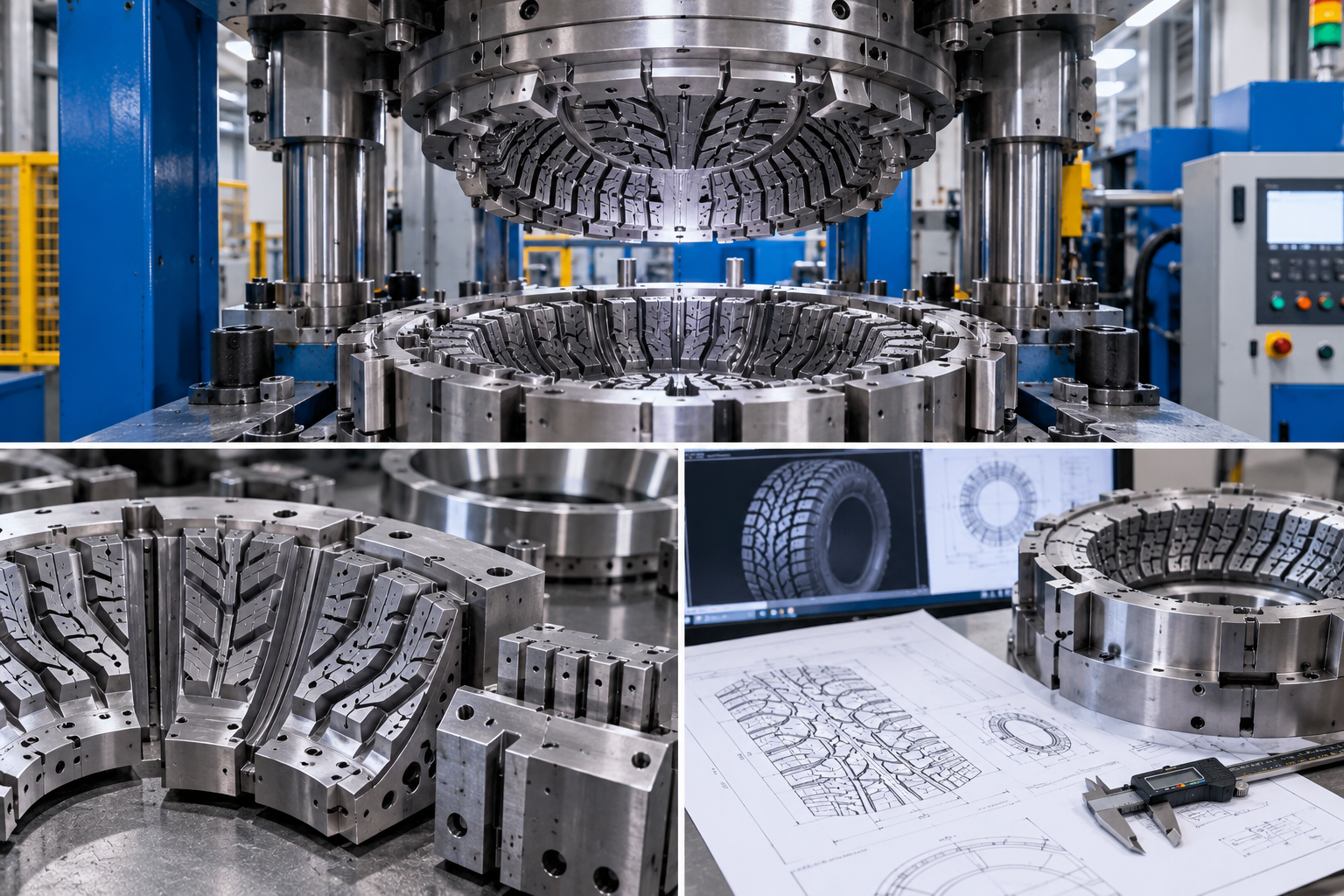
Introducing a new tire mold into an existing production line can be more complicated than expected. For tire manufacturers, the challenge is not simply receiving a finished mold. The new tooling must match the curing equipment, reproduce the required tire geometry, and operate reliably during production.
When buyers search for a mold tire manufacturing solution, they often focus on mold dimensions, tread patterns, and purchase price. However, overlooked technical details can create additional work after delivery.
A mold that does not fit the curing press correctly may delay installation. Incomplete venting arrangements may contribute to tire surface defects. Unclear technical drawings can also result in adjustments that could have been avoided during the engineering stage.
These problems are particularly important for factories introducing new tire sizes, replacing existing tooling, or expanding production capacity.
This article explains three practical ways to reduce installation and production risks when purchasing custom tire molds.
1. Check Mold Tire Compatibility With Existing Curing Equipment
One of the most important steps in a mold tire replacement project is confirming compatibility with the factory’s existing curing equipment.
A new tire mold may be manufactured to the correct tire dimensions but still require additional adjustments if the mounting interface or operating requirements have not been reviewed.
For example, a passenger car tire factory introducing a new tread design may plan to use an existing curing press. Before ordering the mold, the engineering team should confirm that the proposed mold structure is suitable for the equipment.
Important information includes:
- Curing press model and configuration
- Mold mounting dimensions
- Available installation space
- Tire size and profile
- Mold opening and closing requirements
- Relevant operating conditions
- Existing mold or container drawings
These details help establish whether the proposed tooling can be integrated into the production line.
Why early compatibility checks matter
Discovering an interface problem after delivery can create unnecessary installation delays.
The factory may need to arrange additional machining, modify components, or request technical assistance before the mold can be installed.
A more practical approach is to include press-interface requirements in the initial technical review.
Qingdao Pinjin Precision Mold supports custom mold structure design based on customer drawings and specifications. Its manufacturing capabilities include CNC machining, EDM engraving, heat treatment, mold assembly, and quality inspection.
For buyers, the important step is to provide both the tire design and relevant equipment information before the mold structure is finalized.
A mold tire project should not move into manufacturing until the critical interface requirements have been reviewed and approved.
2. Review Mold Tire Venting and Assembly Before Trial Production
Another challenge appears when a new mold enters its first production runs.
Even when the main cavity dimensions are correct, issues involving venting, component matching, or surface condition can affect the appearance of the finished tire.
During tire curing, trapped air and gases need suitable escape paths. If the venting arrangement is inadequate for the tire geometry and production conditions, localized surface defects may occur.
Poorly matched mold components can also create unwanted marks or rubber flash.
These issues can increase the amount of adjustment and inspection required during trial production.
Important inspection points
Before accepting a new tire mold, buyers should discuss how the following features will be verified:
- Tread cavity geometry
- Sidewall profile and markings
- Venting components and passages
- Segment or component matching
- Mold split-line condition
- Surface finish
- Assembly dimensions
- Critical mounting interfaces
Not every tire mold uses the same component structure, so the inspection plan should match the specific design.
Pinjin manufactures precision tire mold components, including sidewall plates, tread segments, mold rings, inserts, and venting components.
The company also states that quality inspection is integrated throughout machining, fitting, and assembly.
For tire factories, these manufacturing controls are relevant because a completed mold is more than a collection of individually machined parts.
Its components must fit together according to the approved design.
Application example: agricultural tire production
Agricultural tires often feature deep traction lugs and distinctive tread patterns.
These designs can introduce different cavity, venting, and release requirements compared with simpler tread geometries.
When purchasing a mold for agricultural tire production, the buyer should therefore review the actual tread geometry and discuss the appropriate venting and mold structure with the supplier.
The same principle applies to passenger car, motorcycle, ATV, and OTR tire applications, although the engineering requirements will differ.
A carefully reviewed mold tire design can help reduce uncertainty before trial production begins.
3. Reduce Mold Tire Rework Through Clear Technical Documentation
The third challenge is communication between the tire factory and the mold manufacturer.
Custom tire mold projects often involve multiple drawings, product specifications, design revisions, and technical approvals.
If different teams work from different versions of the same drawing, the final tooling may not match the latest requirements.
For example, a tire manufacturer may change the sidewall markings after the initial quotation. If the updated artwork is not included in the approved manufacturing data, the finished mold may require modification.
Similar problems can occur when tire dimensions, tread details, or press-interface specifications are revised without a clear approval process.
What should be confirmed before manufacturing?
A practical technical package should include the following information.
Mold Tire Applications: Different Factories, Different Priorities
The technical priorities of a mold tire project depend on the tire application.
Passenger car tire manufacturing: Buyers may focus on tread geometry, sidewall details, press compatibility, and consistent production.
Truck and bus tire manufacturing: Mold structure, dimensions, and compatibility with heavy-duty production equipment require careful review.
Agricultural tire manufacturing: Deep traction patterns create particular considerations for cavity geometry, venting, and tire release.
OTR tire manufacturing: Large tire dimensions and demanding tread designs can increase the importance of mold structure and equipment compatibility.
Motorcycle and bicycle tire manufacturing: Smaller dimensions and detailed tread features may require close attention to machining and component fitting.
Pinjin lists tire mold solutions for these applications, along with ATV and solid tire molds.
Because the applications differ, a mold design suitable for one production line should not automatically be assumed suitable for another.
How to Prepare for a New Mold Tire Project
Before requesting a quotation, the purchasing and engineering teams should coordinate their requirements.
The purchasing team may focus on price, lead time, and delivery arrangements. The engineering team should review tire geometry, mold structure, curing equipment, and acceptance requirements.
Combining these perspectives can help the supplier understand the complete project.
Pinjin states that its mold production lead time depends on mold type, size, and technical requirements. A confirmed manufacturing schedule is provided after engineering review.
For additional information about the manufacturing process, read Pinjin’s Tire Mold Manufacturing Process: 8 Essential Steps.
For international tire standardization information, refer to the ISO Technical Committee for Tyres, Rims and Valves.
Conclusion: A Successful Mold Tire Project Starts Before Manufacturing
Purchasing a new tire mold involves more than comparing prices or selecting a tread pattern.
For factories introducing new products or replacing existing tooling, technical preparation can help reduce avoidable delays.
Three areas deserve particular attention.
First, confirm compatibility between the mold and existing curing equipment.
Second, review venting, component matching, and assembly requirements before trial production.
Third, establish clear technical documentation and drawing approval procedures to reduce rework.
Qingdao Pinjin Precision Mold provides custom tire mold manufacturing, CNC machining, EDM engraving, heat treatment, mold assembly, quality inspection, and replacement component services.
Manufacturers planning a new mold tire project can submit their tire drawings, curing equipment information, and production requirements for technical evaluation and quotation.
A well-prepared project gives both the tire factory and mold manufacturer a clearer basis for producing tooling that meets the intended application.